

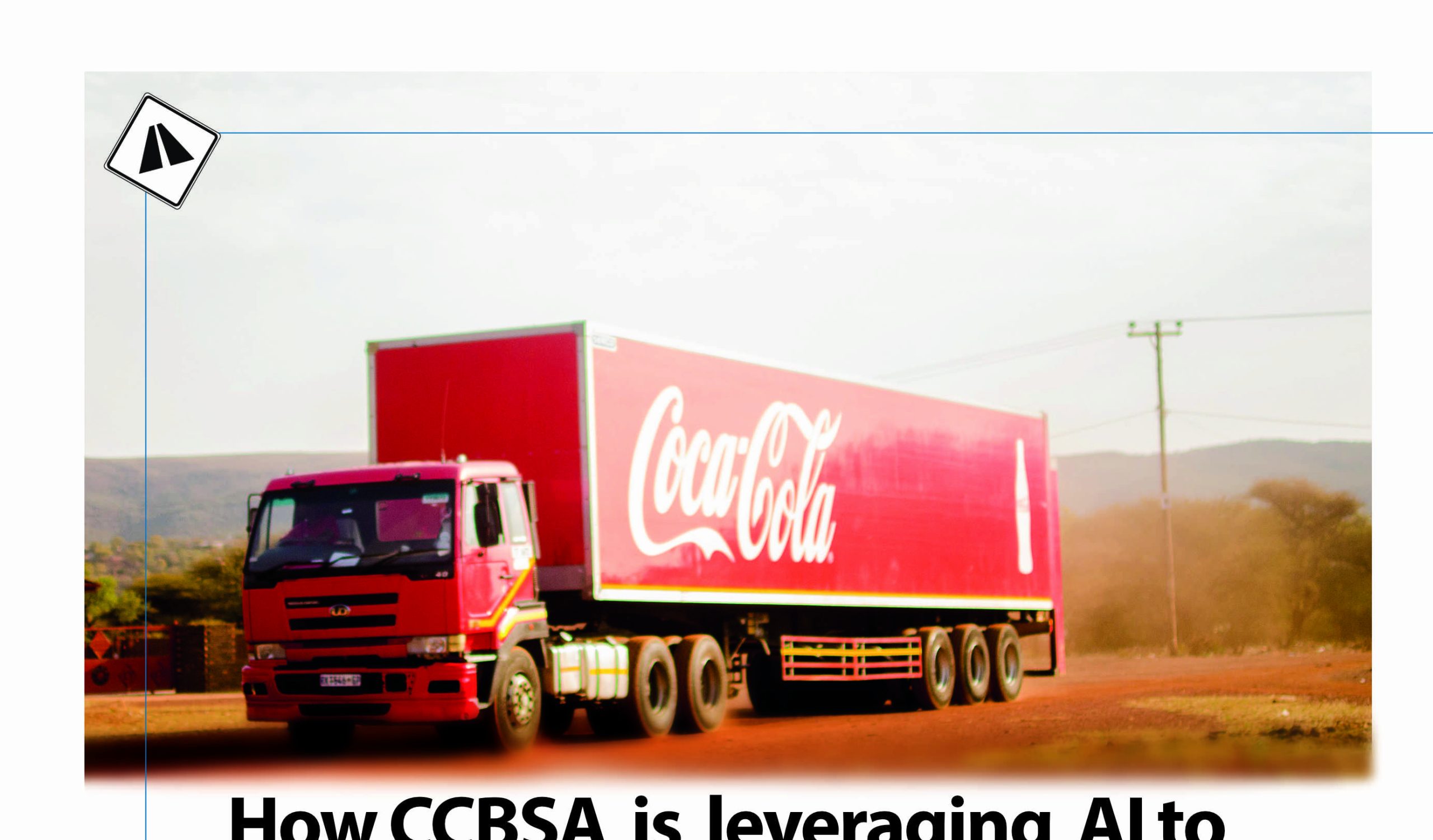
As South Africa’s roads become increasingly congested, Coca-Cola Beverages South Africa is investing in AI-powered technology to help identify driver risks earlier, support safer driving behaviours and strengthen fleet safety across its operations.
South Africa’s road network continues to carry increasing volumes of traffic, creating a more complex operating environment for businesses that depend on transport and logistics. According to the Road Traffic Management Corporation, the country’s licensed driver population grew from 15.99 million in 2024 to 16.50 million in 2025, placing additional pressure on already busy roads.
For companies operating large vehicle fleets, road safety is not only a compliance requirement but also a critical operational priority. Every day, vehicles travel thousands of kilometres to deliver products, support customers and keep supply chains moving. Managing risk across those journeys requires a proactive approach that combines technology, training and driver engagement.
Using AI to identify risk before incidents occur
To address this rising challenge, organisations like Coca-Cola Beverages South Africa (CCBSA) are leveraging technology to strengthen road safety and reduce risk across their transport operations. In May 2025, CCBSA, a Coca-Cola authorised bottler and a company in the Coca-Cola Beverages Africa group, introduced AI-powered in-cab cameras across its logistics fleet. The offering, designed to identify potentially risky driving behaviour in real time, was subsequently expanded to include customer delivery, commercial distribution and event-support vehicles.
Unlike conventional vehicle cameras that primarily provide footage after an incident, the AI-enabled system can detect signs of driver fatigue, distraction, mobile-phone use and seatbelt non-compliance while a journey is taking place. Drivers receive immediate alerts, allowing corrective action to be taken before a potential incident occurs.
“Safety is at the heart of everything we do, and by combining technology, training, and engagement, we are creating a safer workplace and safer roads for all,” says Desilan Pillay, Logistics Director at CCBSA. “Technology is helping us take a more proactive approach to risk management. By identifying potentially unsafe driving behaviours earlier, we can support our drivers through targeted coaching and interventions that strengthen safe driving practices across the business.”
Supporting a broader culture of safety
The cameras are part of a broader safety programme that includes route-to-market risk assessments and defensive driver training. These measures help drivers understand and avoid potential risks, while improving operational performance.
When a risk is detected, the system provides an immediate alert to the driver, allowing the behaviour to be corrected. The information can also be used for targeted coaching and learning after an event, giving CCBSA greater visibility of recurring risks across its fleet.
Importantly, the programme is also intended to build driver confidence. Video evidence from the system can support accident management, help guard against false claims, and enable teams to learn from each event. The system also improves data accuracy, creating a clearer basis for recognising and rewarding safe driving behaviour over time.
Powering efficiency across the value chain
Beyond road safety, CCBSA is leveraging AI, automation, and smart infrastructure to drive efficiency and innovation in its complex supply chain. The company operates with over 5,600 employees across 11 manufacturing sites in South Africa, making productivity and efficiency key priorities.
Automation in warehouses and distribution centres accelerates inventory handling, reduces errors, and improves lead times. AI enables predictive modelling, route optimisation, demand forecasting, and real-time fleet management. IoT sensors and smart infrastructure provide continuous monitoring of assets, cold chain conditions, and maintenance needs, helping to ensure operational reliability and compliance.
Transport Month serves as a reminder that road safety is a shared responsibility. For companies operating large fleets, every delivery route, customer visit and event activation is an opportunity to reinforce safer driving behaviour. As October com logistics es to a close, the initiative highlights how technology can complement existing safety measures to help create safer journeys and smarter.